

Wall Insulation: The Smart Way to Keep Heat Out and Comfort In
You can feel it on a hot day.
Some rooms heat up fast, and the air con works overtime. Then the next power bill hits.
Much of that heat comes through your walls.
Without insulation, heat flows in and out all year, making your home harder to cool and harder to warm.
The fix is simple: proper wall insulation.
It can cut heating and cooling costs by around 15%, and it makes every room feel more stable and comfortable.
What Type of Insulation Is Best for Walls?
The best insulation depends on your wall type and climate, but most Australian homes use a mix of bulk batts, rigid foam boards, spray foam, or cavity fill.
Spray foam insulation seals and insulates in one step, filling every gap that leaks air. It suits older homes with uneven framing, tight cavities, or hard-to-reach areas. It gives a strong thermal seal and reduces drafts and moisture.
Bulk batts are the most common and affordable option for new builds or open wall cavities. Rigid foam boards work well for external applications or areas where you need to reduce thermal bridging.
Each material works differently. The best choice depends on your wall type and how your home handles heat.
Let’s look at how insulation works for different wall types and how you can choose the right setup for your home.
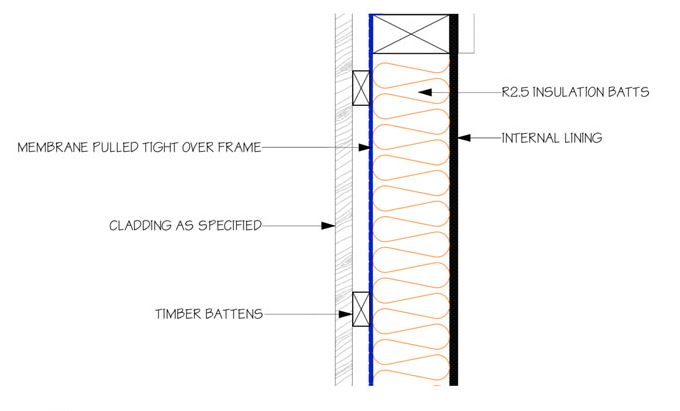
Waterproof vapour-permeable wall membrane and bulk insulation under weatherboard
Source: Envirotecture
Weatherboard Walls
Uninsulated weatherboard walls have a total thermal resistance of approximately R0.45, which is insufficient for comfort or energy savings.
Adding insulation lifts that number and helps your home stay steady in both hot and cool weather.
Use a vapour-permeable membrane over the outer frame to protect against moisture.
Spray polyurethane foam between the stud work and directly onto the external cladding or fit bulk batts snugly inside the cavity with no gaps. Even small spaces let in more heat than you think.
Brick Veneer Walls
Brick veneer walls also have a thermal resistance around R0.45, but they behave differently. In summer, the bricks absorb heat through the day and release it into your home during the evening.
Spray foam insulation can be sprayed directly between the studwork during construction. The foam can be sprayed at various thicknesses by either filling the cavity or leaving a space that can be used for running services.
Alternatively, add batts between the studs, fitted to the depth of the wall frame. For better performance, a rigid foam board can be installed in the cavity between the bricks and the frame. In cooler regions, a foil-faced option helps reflect heat inward.
Always tape wall-wrap joints securely, overlap at least 100mm, and keep the wall cavity clear for airflow and brick ties.
Installing insulation outside the studs helps stop thermal bridging and boosts the R-value. PIR, PUR or XPS boards all work well.
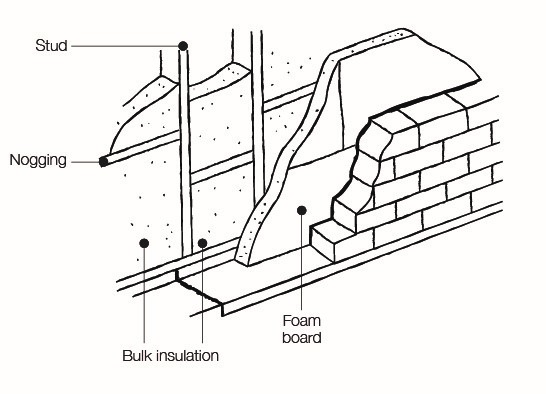
Brick veneer with foam board and/or bulk insulation
Source: Your Home

Cavity Brick Walls
Cavity brick walls have around R0.45 resistance on their own, so extra insulation is needed. The two main options are foam boards or cavity fill insulation.
Cavity fill suits existing double-brick homes and lifts resistance to about R1.3, depending on cavity width. Check local rules. The product must be water repellent and properly installed to prevent moisture issues.
Foam boards with reflective surfaces work best when there is an adequate air gap between the board and the brick. Follow the manufacturer’s instructions for spacing and installation in your climate zone. Polyurethane spray foam can also be used to fill hard-to-reach wall cavities, providing both insulation and an airtight seal.
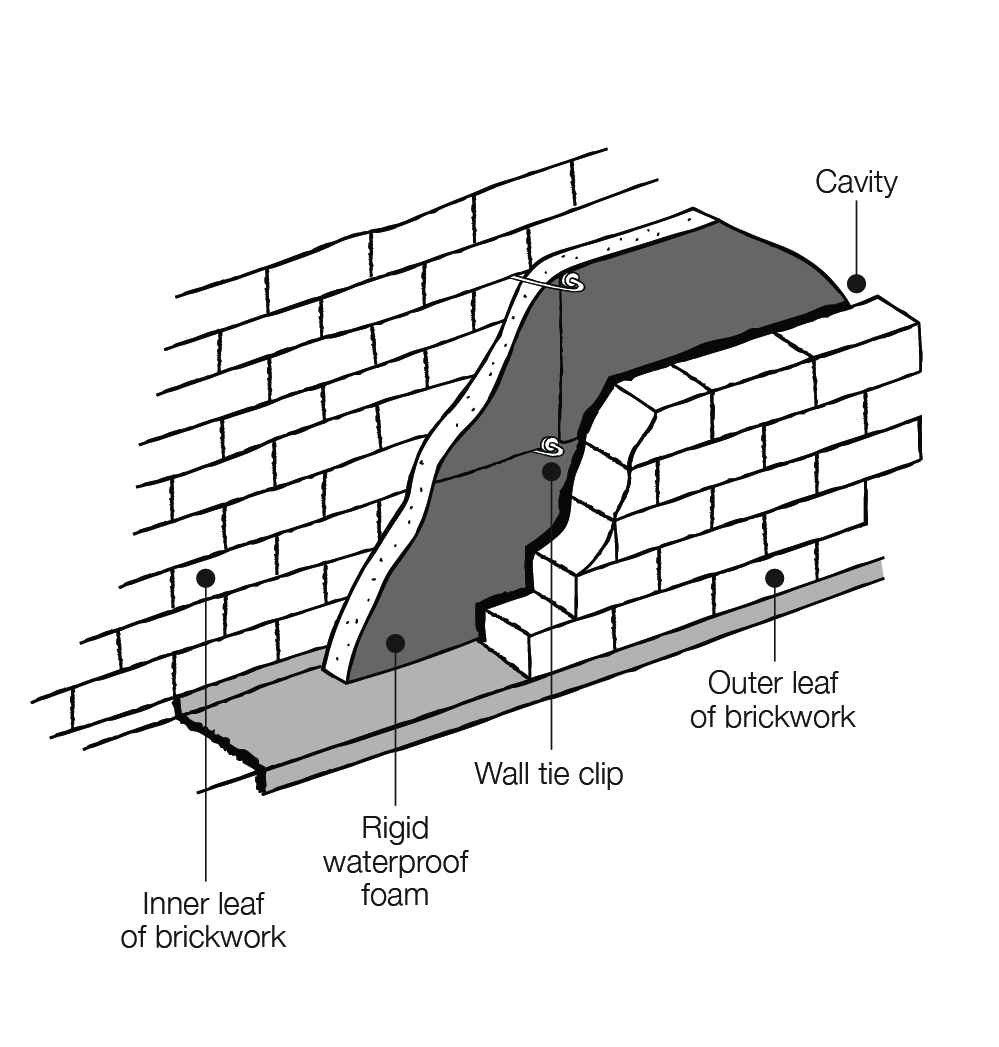
Cavity brick wall with extruded foam.
Source: Your Home
Solid Walls
Solid walls include concrete, brick, rammed earth, stone, and blockwork.
They have low thermal resistance (R0.3–R0.4), so they usually need extra insulation.
You can insulate solid walls inside or out, but do not insulate the inside if the wall is used for thermal mass, as it blocks its natural ability to store and release heat.
Suitable materials include polyurethane spray foam, rigid foam boards, bulk batts between battens, and foil-faced foam boards with an air gap of at least 15mm, with the foil facing inwards. These can be vapour-permeable or vapour-impermeable, depending on your location.
Externally, polystyrene cladding with render offers a smooth, durable finish that also enhances thermal performance.
Spray foam suits solid or framed walls where standard materials do not fit. It forms a continuous layer that strengthens walls and blocks air leaks.
Internal Walls
You only need to insulate internal walls that are adjacent to uninsulated or unconditioned spaces, such as garages, laundries, or storerooms.
For internal walls, plasterboard bonded to spray applied rigid foam is also a good choice, offering a clean finish and improved performance. The required R-value varies depending on the design and climate.
Use the same insulation level as your external walls to maintain even indoor temperatures throughout the home.
Internal walls can also be insulated if there were specific rooms that would like to be kept at a certain temperature, for example the opposing side of a kitchen can be a common requirement. Insulating internal walls with PU spray foam can also be an option to improve sound absorption between rooms.
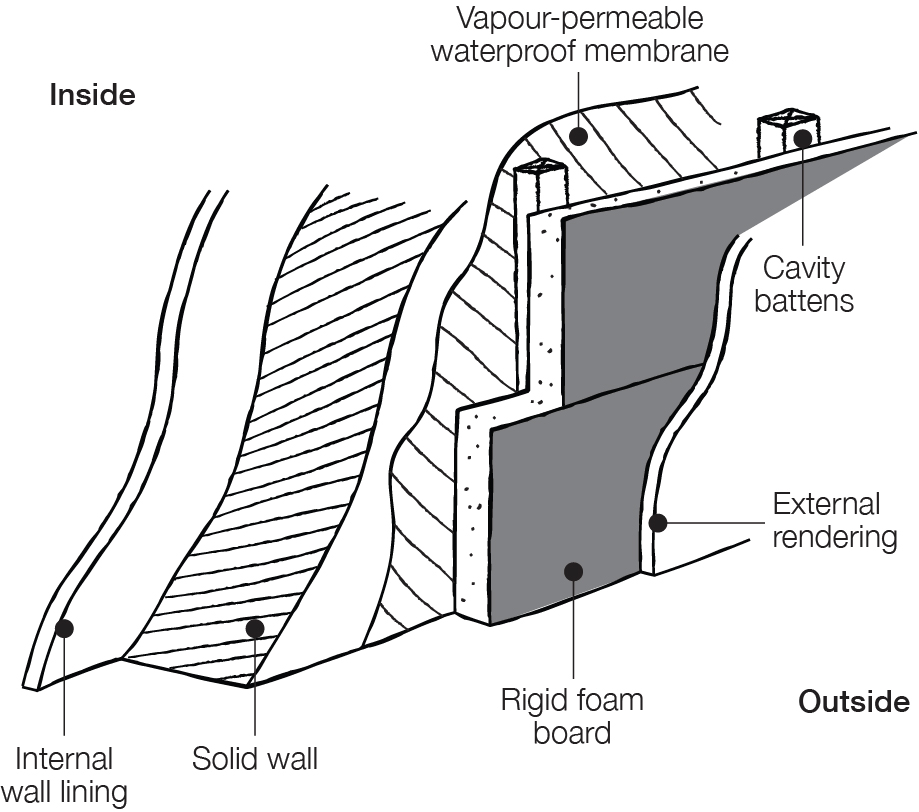
Solid wall with external polystyrene and render.
Source: Your Home
How Can I Insulate My Walls Cheaply?
For a budget option, start with easy-to-access areas like roof spaces, garages, or rooms under renovation.
Even small upgrades, like sealing wall gaps and adding reflective wraps, can lower your bills and improve comfort.
Keep Comfort In and Costs Down
Wall insulation keeps your home comfortable year-round and helps cut energy bills.
If your walls are still uninsulated, now is the time to act.
Contact us today for expert advice, clear answers, and a solution for your home insulation.
Related insulation services: roof insulation, underfloor insulation and residential insulation solutions.


![Roof And Ceiling Insulation Best Options For Australian Homes [2025]](https://www.tatescoating.com.au/wp-content/uploads/2025/08/IMG_6686-2-scaled-e1755237128422-uai-2134x1067.jpg)